Immigration Law
One lawyer. Every state. Every consulate.
United States Citizenship and Immigration Services receives more than nine million applications, petitions, and requests every fiscal year. The Department of State issues another nine million visas at consular posts abroad. Behind each of those numbers is a family making a decision about where their next decade will be lived, what country their children will grow up in, and which government will issue the documents that define their daily life. The work of immigration law is the work of helping individual people navigate a federal bureaucracy that was never designed with the individual in mind.
Our practice is built around the conviction that even within a system this large, every case deserves the same depth of preparation that the largest corporate immigration filings receive. The marriage green card application for a hospital nurse in Bakersfield is, in our office, prepared with the same care as the EB-1 application for a Silicon Valley executive. The N-400 naturalization petition for a retired grandmother in Glendale is briefed for the interview with the same rigor as a contested removal-of-conditions matter that may end in litigation.
The Federal System
Immigration is national. Our practice is too.
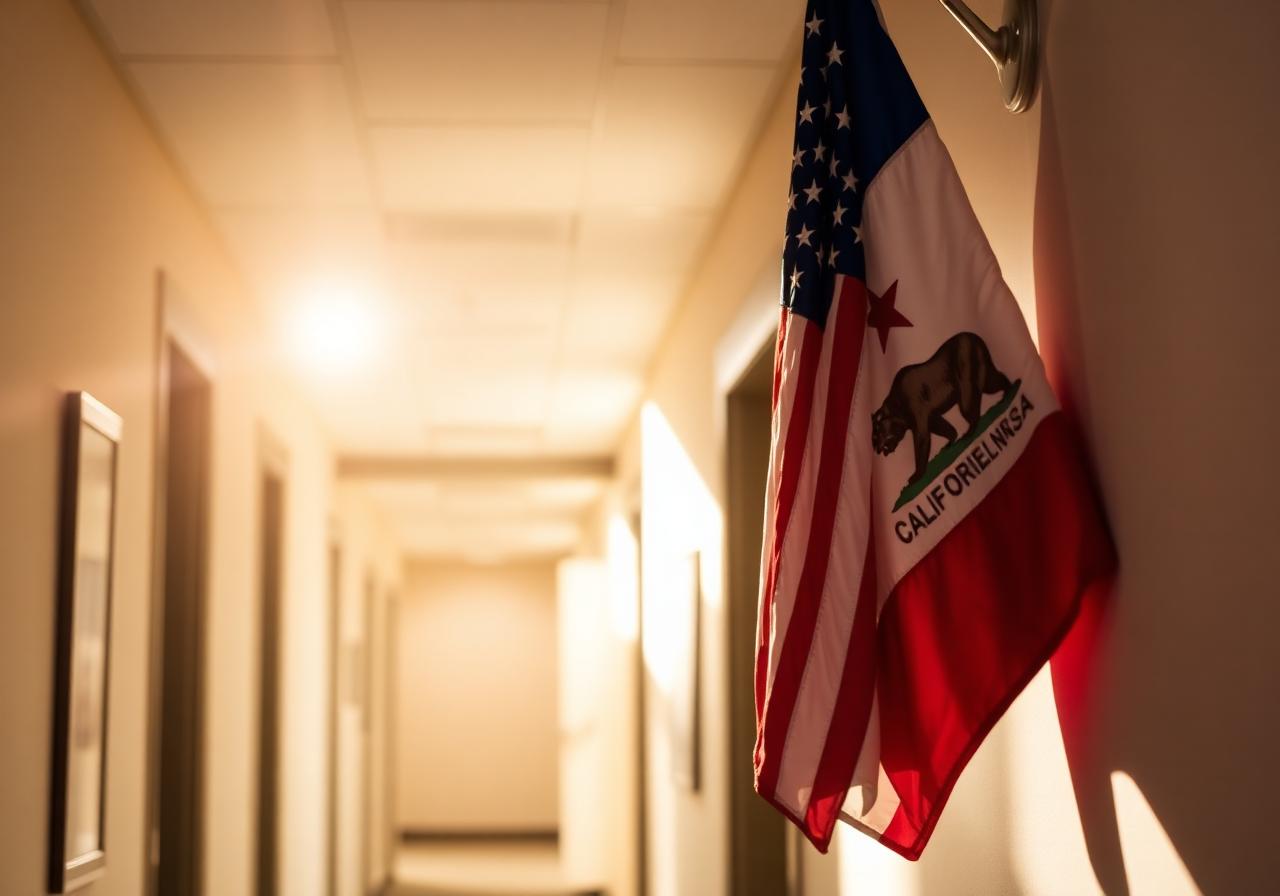
Federal immigration law is administered nationwide by U.S. Citizenship and Immigration Services, the U.S. Department of State, U.S. Customs and Border Protection, and the immigration courts under the Executive Office for Immigration Review. Because the substantive law is federal, an attorney admitted in any state can represent clients before USCIS and the State Department in matters arising anywhere in the country. Rod is licensed in California, and our immigration caseload spans clients in all fifty states and beneficiaries waiting in more than thirty foreign countries.
What that nationwide reach actually means for clients is straightforward. The marriage green card application we prepare for a couple in Houston follows the same regulatory framework as the one we prepare for a couple in Pasadena. The consular interview preparation we do for a beneficiary in Manila draws on the same body of post-specific knowledge whether the petitioner lives in Long Beach or in Boston. We have built case files for every USCIS service center and have argued before consular officers at posts on five continents.
The practical advantage of a small firm with national reach is that one attorney's institutional memory of a particular consular post or a particular USCIS adjudicator's tendencies can be applied across cases that, on the surface, have nothing in common. We learn from every file, and the next file benefits from what the last one taught us.

Family-Based Work
The cases that bring families back together.
More than half of our immigration caseload is family-based. We handle marriage-based adjustments and immigrant visa cases for spouses of U.S. citizens and lawful permanent residents, parent and child petitions in the immediate-relative category, fiancé(e) cases under K-1, family preference petitions in F1 through F4, removal-of-conditions filings under I-751, and the eventual N-400 naturalization application that often follows years later.
These cases share a common architecture but differ enormously in their pacing. An immediate-relative spousal petition filed concurrently with adjustment of status can produce a green card in eight to fourteen months at most field offices. An F4 sibling petition can sit in line for fifteen to twenty-three years before a visa number becomes available, depending on the country of chargeability. We map the realistic timeline for every family in our first conversation, because false expectations about pace are the single largest source of client frustration in family-based work.
We also stay with families across the full arc of the relationship with the immigration system. The same lawyer who filed your I-130 will brief you for the consular interview at the embassy abroad, will file the I-751 to remove conditions on the green card, and will eventually prepare the N-400 application that takes you to the oath ceremony.
Consular & Visa Work
Embassy strategy, post-specific preparation, and the interview that decides everything.
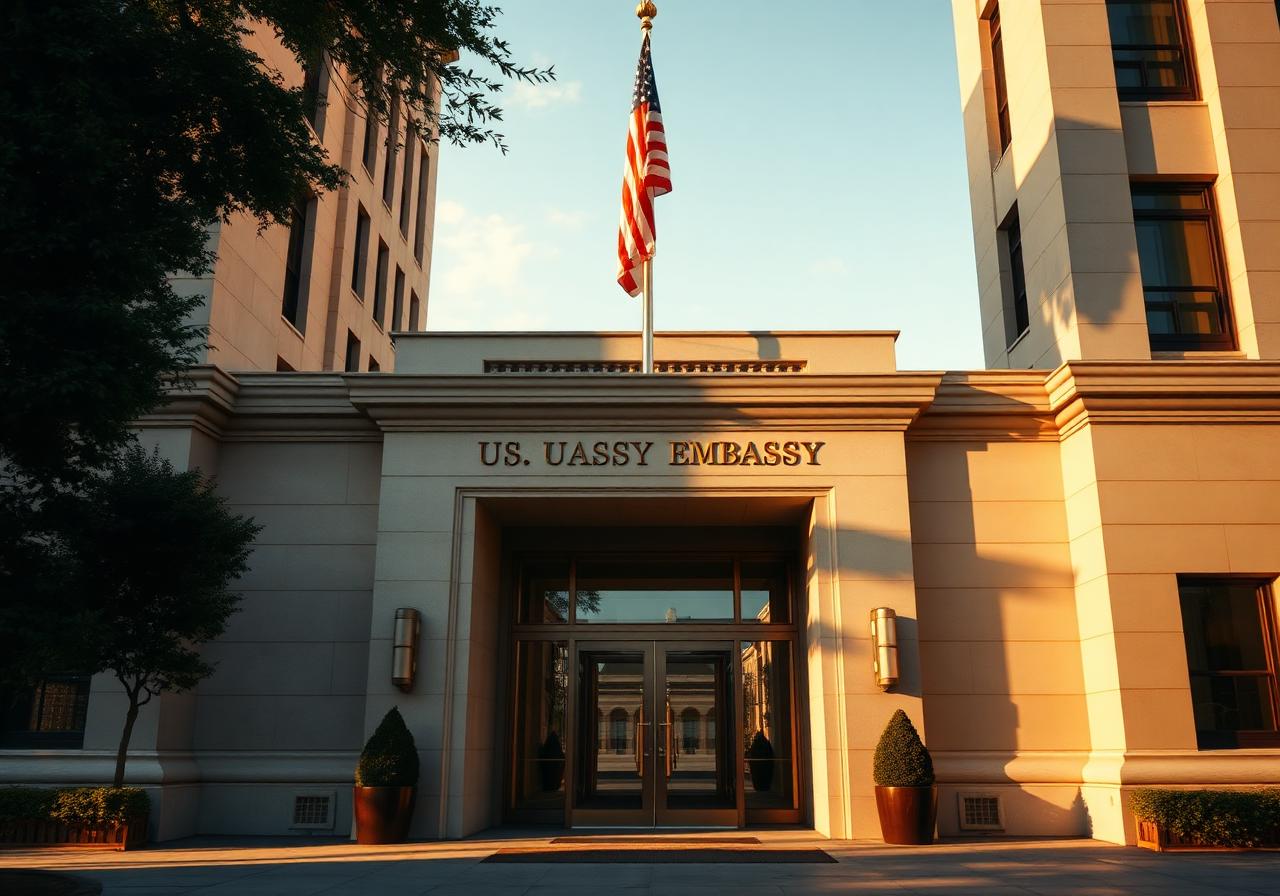
A meaningful share of our immigration matters end at a U.S. embassy or consulate abroad rather than in a USCIS field office in the United States. The State Department issued more than 550,000 immigrant visas and roughly 8 million nonimmigrant visas in the most recent fiscal year for which complete data is available, and the consular interview is, for most beneficiaries, the single decisive moment in their case.
We have prepared cases for posts on every continent except Antarctica. Post practice varies — sometimes dramatically. The same case category produces materially different interview tendencies in Manila versus Cairo versus Bogotá versus Mumbai. The documents one post asks for at the window are not the documents another post will look at. We brief beneficiaries on the specific patterns of the post where their case will be heard, often in the beneficiary's native language, with mock interview sessions drawn from the actual line of questioning that post is known to use.
The doctrine of consular nonreviewability means that, with vanishingly few exceptions, the consular officer's decision is final. Reapplication is possible, but a second application carries the weight of the first refusal. The first impression matters more in this practice area than almost any other, and we treat it accordingly.

Citizenship
Naturalization and the oath at the end of the road.
Roughly 870,000 lawful permanent residents are naturalized as U.S. citizens each year. The application — Form N-400 — is, on its surface, one of the simpler immigration filings. Below the surface, it is one of the most consequential. Naturalization triggers a final review of the applicant's complete immigration history. A traffic citation that produced a conviction the applicant assumed was minor, an absence from the United States that ran longer than expected, or a tax filing irregularity that the applicant never thought to disclose can each produce questions at the interview that the applicant is unprepared to answer.
We review the complete immigration history before the application is filed. We obtain the FOIA file from USCIS where appropriate to confirm that the record we believe to be in place is the record the agency actually has. We brief applicants on the civics test, the English test, and the line of interview questions that have produced complications for clients in the past.
The oath ceremony is the formal end of one journey and the beginning of another. We have walked clients to the courtroom door more than a thousand times, and the moment never gets less moving for us. It is, after all, the reason the practice exists.
A complete
immigration practice.
From the first consultation to the moment you take the oath of citizenship, we represent you with the seriousness and care your future demands.
Bringing spouses and partners home through K-1, CR-1, IR-1, and adjustment of status.
Reuniting parents, children, and siblings with petition strategies tailored to your family.
From eligibility review to the oath ceremony — we walk every step with you.
EB-1, EB-2, EB-3, and PERM strategies for professionals, executives, and skilled workers.
H-1B, O-1, L-1, F-1, B-1/B-2 — the right visa for your goals.
Specialized advocacy for military families and those facing extraordinary circumstances.
Clarity at every step.
Strategy Session
We sit down, understand your goal, and map a realistic path.
Case Building
Documents, evidence, and a meticulously prepared filing.
Filing & Advocacy
We submit, track, and respond to USCIS at every turn.
Approval
You receive your status — and a firm you can return to for life.
- Direct access to your attorney, not just a paralegal
- A bilingual team familiar with the immigrant experience
- Transparent flat-fee pricing whenever possible
- Document checklists and step-by-step guides
- Honest assessments — even when the answer is hard
- Lifelong relationship for future immigration needs
Let's build the path forward, together.
A strategy session is the first step. Bring your questions — leave with a plan.